
ARCHITECTONIC PAINTING
At the core of Jeu. lies Architectonic Painting, a geometrically conceived, hand-executed construction in which linen is stretched over architectonic wooden frames. Within this tensile configuration, curved surfaces emerge from the interaction of structure, tension, material and void.
Here, the structural system does not merely hold the work in place. It acts as a generative principle, establishing spatial order and translating the underlying mechanism into perceptible form.
What appears as stillness is not immobility, but a dynamic equilibrium sustained by tension. Each curved surface retains the traces of its formation—pressure, resistance and release—as if an interval of force had been arrested in the material.
Consequently, the work’s three-dimensionality is neither the result of sculptural procedures, whether by carving or casting, nor of digital fabrication. Rather, it is a function of an architectonic logic that articulates the interplay of constitutive dualities: shaped membrane and underlying structure, visible curvature and invisible tension, material presence and spatial void.
Even the painterly process no longer serves representation: drawn lines, grids, colour fields and stepped gradients operate as perceptual instruments through which curvature, tension and deformation become legible. In parallel, the canvas, traditionally a passive ground for an image, assumes a formative role as a tensile membrane—an active site where form is produced. This reverses the conventional hierarchy between image and support.
In this sense, Jeu. challenges the conventional premise of pictorial flatness, extending painting into space as small architecture in which causality is given body.
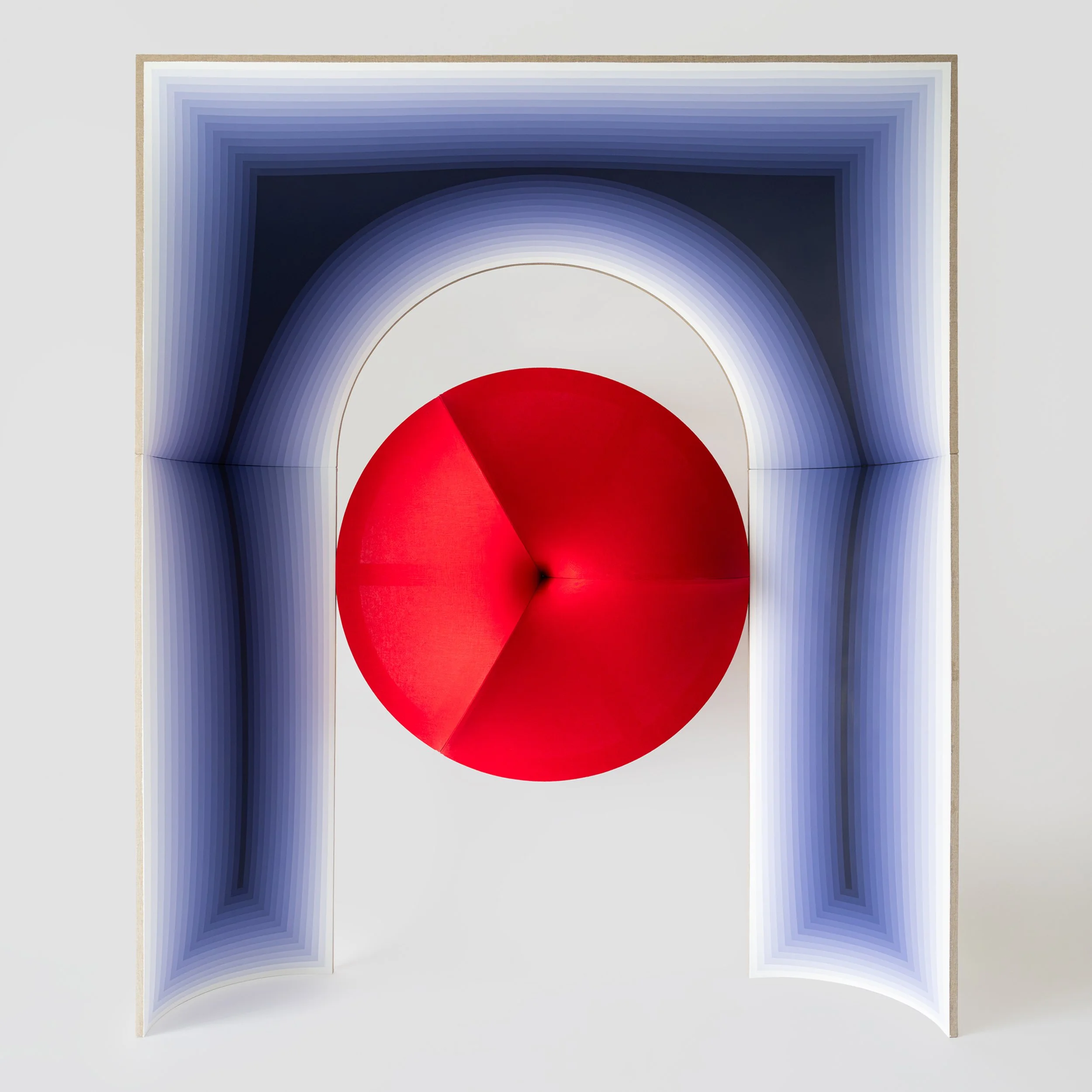
SUSPENDED GRAVITY
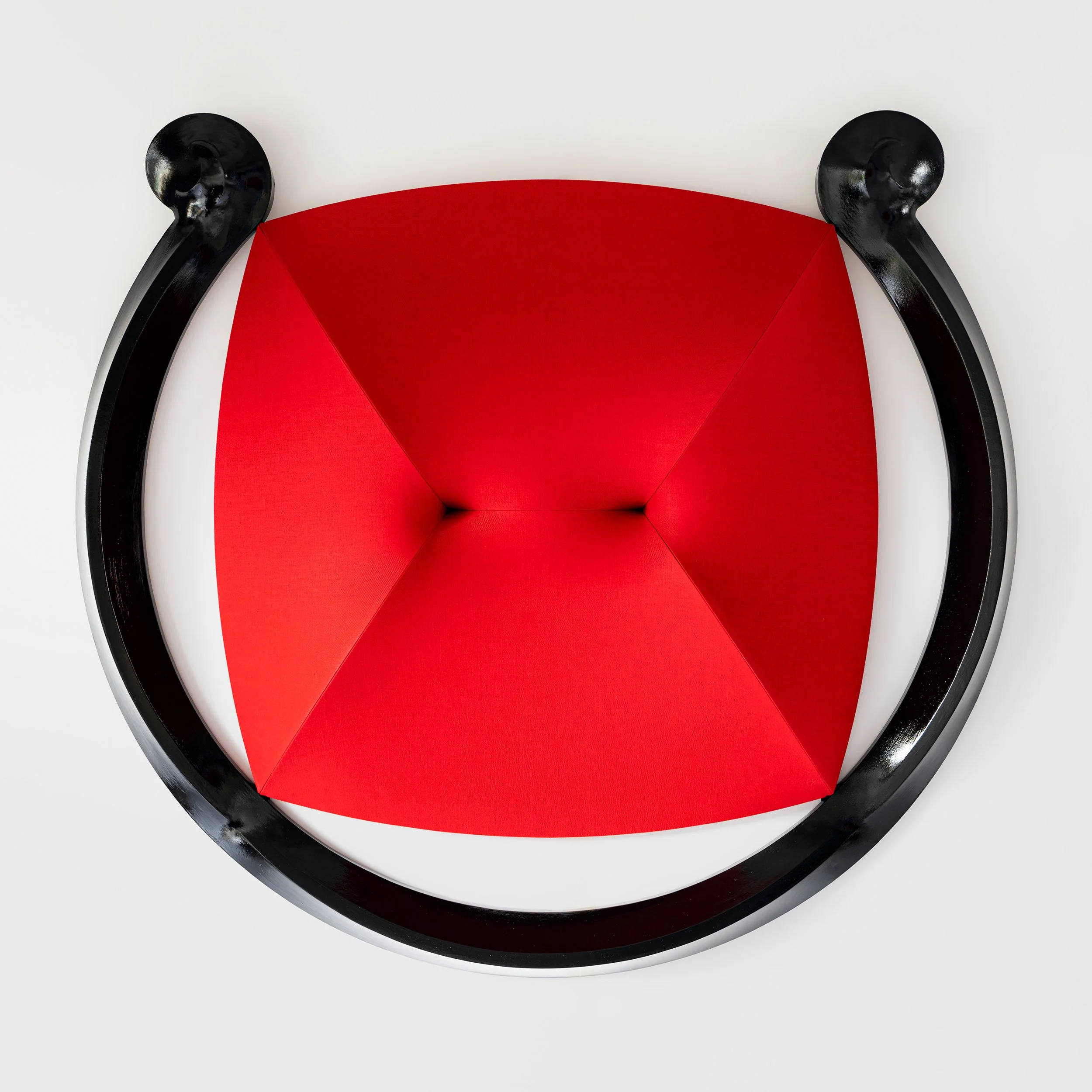
VOLUTE—Constraining the Bulging Square
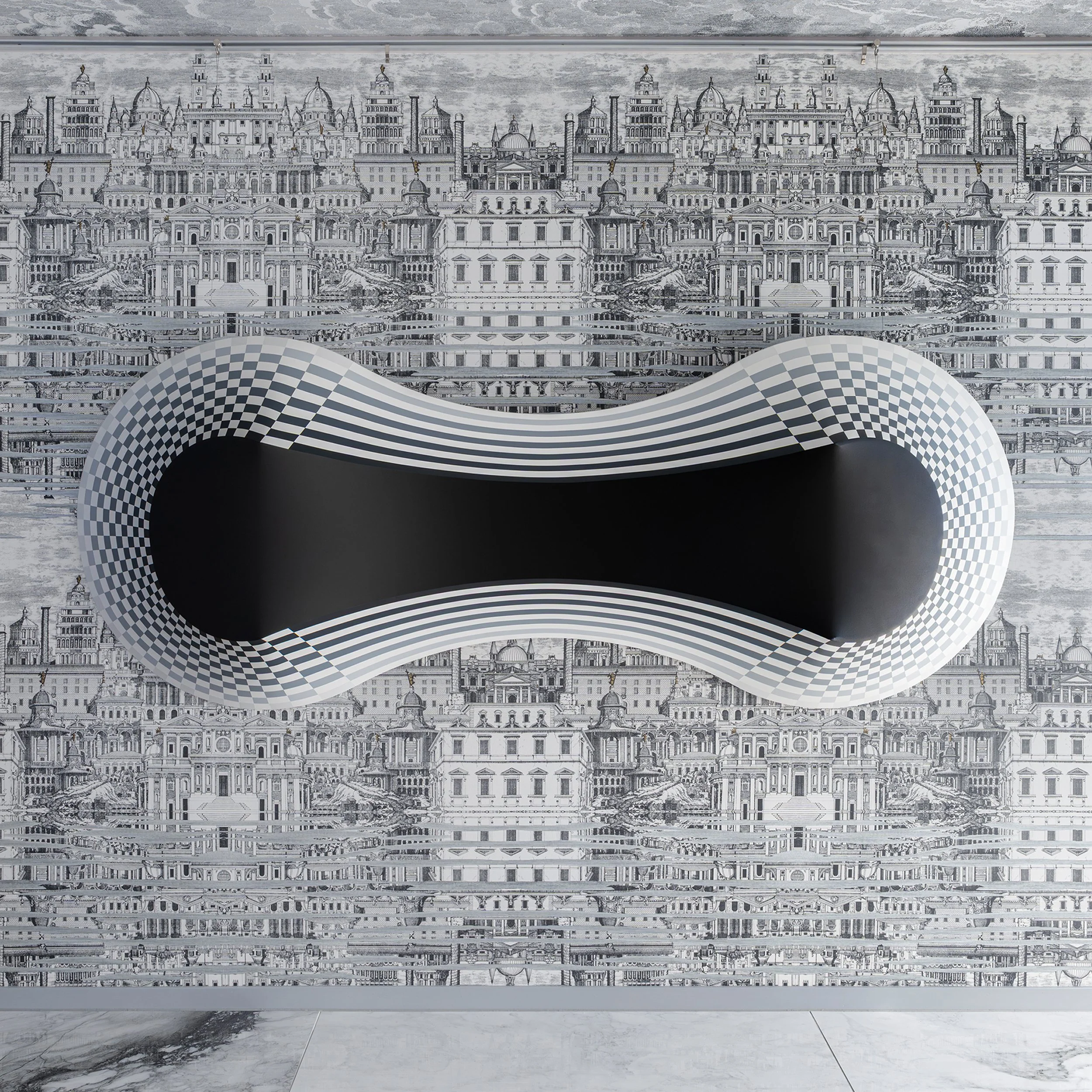
STRETCHING (IN)TENSION
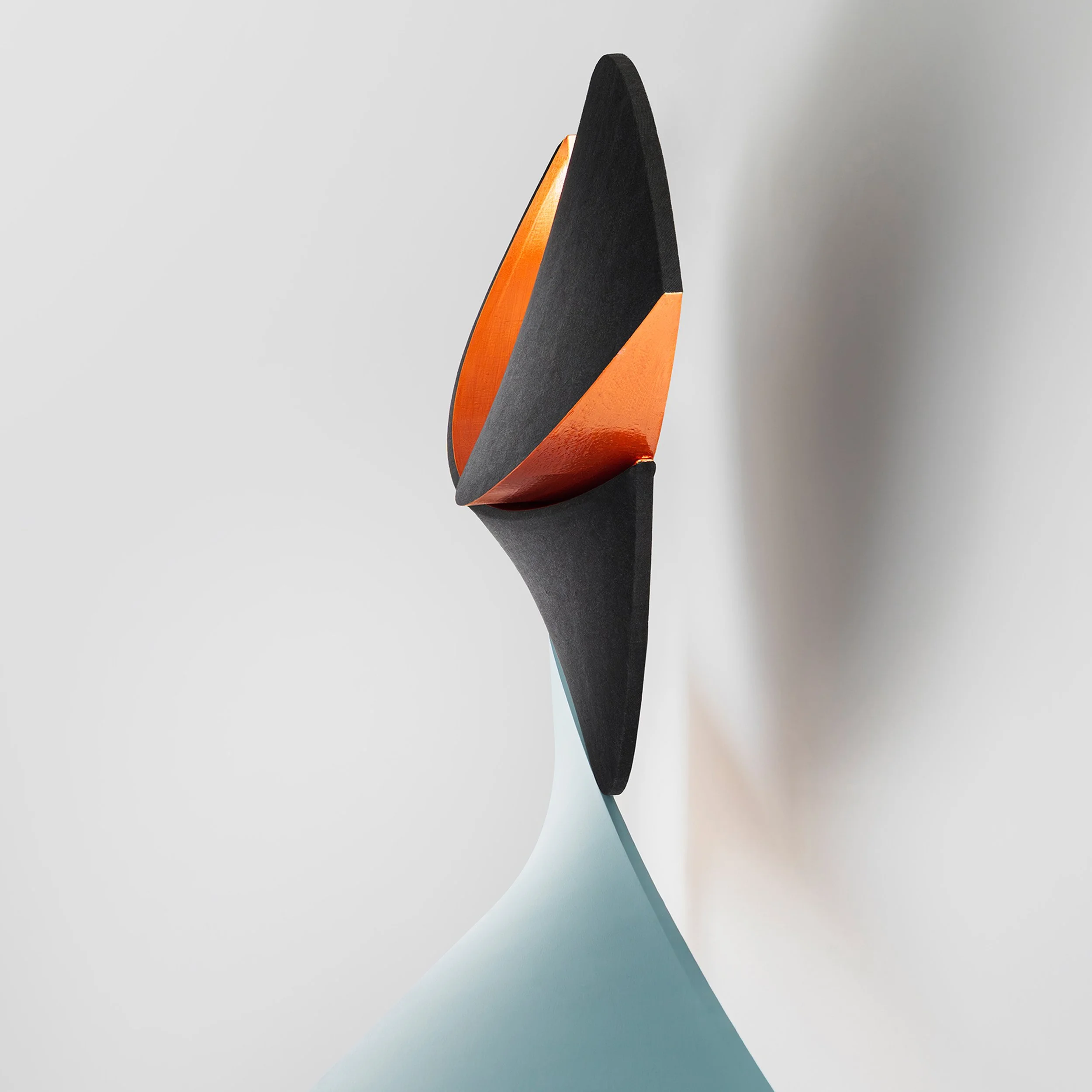
DYNAMICAL COUNTERPOINT III
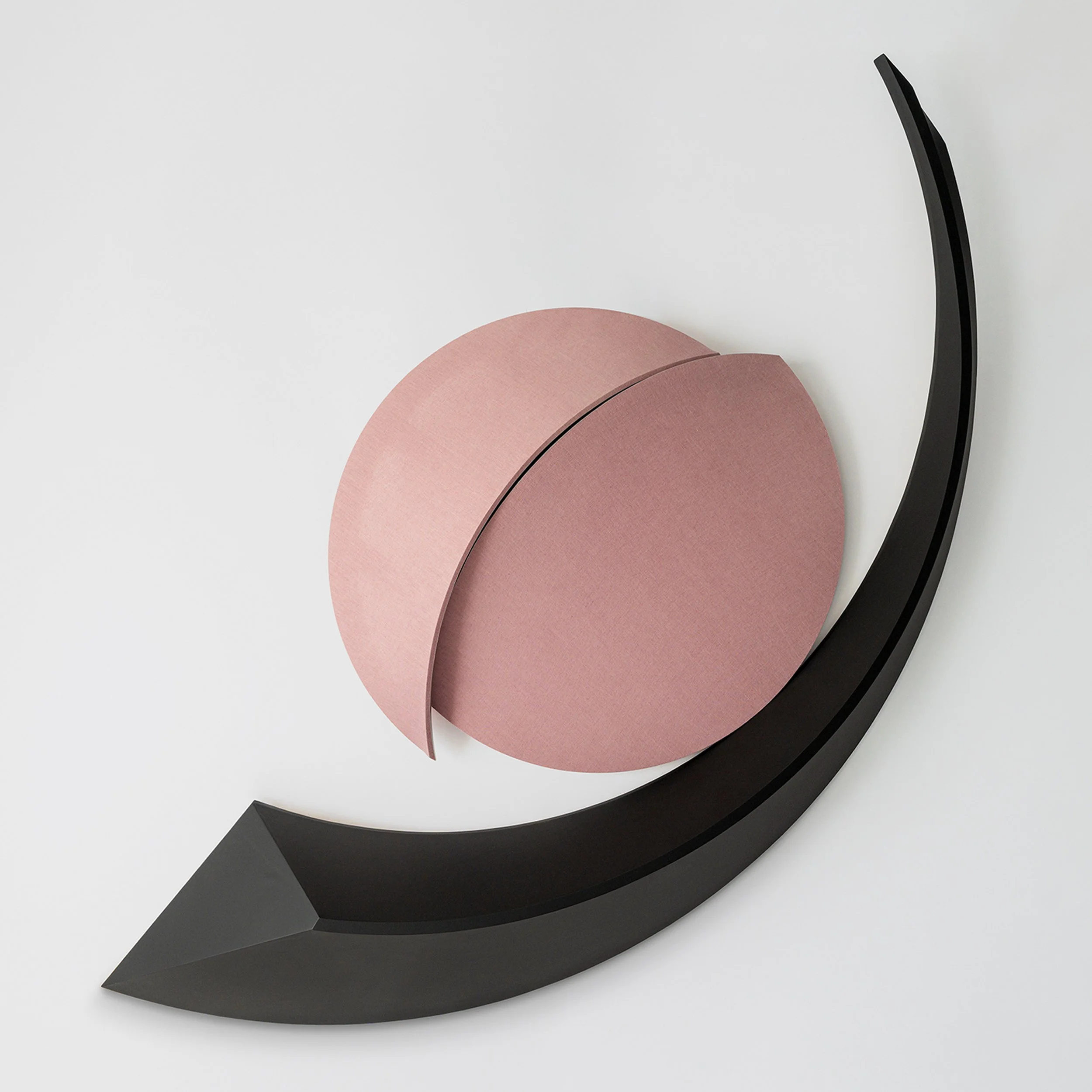
DYNAMICAL COUNTERPOINT II

DYNAMICAL COUNTERPOINT I

VESICA PISCIS

GEOMETRY OF RESTRAINT—Circle inside Sector inside Square

GEOMETRY OF RESTRAINT—Triangle inside Circle inside Reuleaux Triangle inside Square

GEOMETRY OF RESTRAINT—Triangle inside Reuleaux Triangle inside Square

DIMENSIONAL LANDSCAPE —Double Spiral— III

DIMENSIONAL LANDSCAPE —Double Spiral— II

DIMENSIONAL LANDSCAPE —Double Spiral— I

DIMENSIONAL LANDSCAPE —Square in Spatiotemporality—