
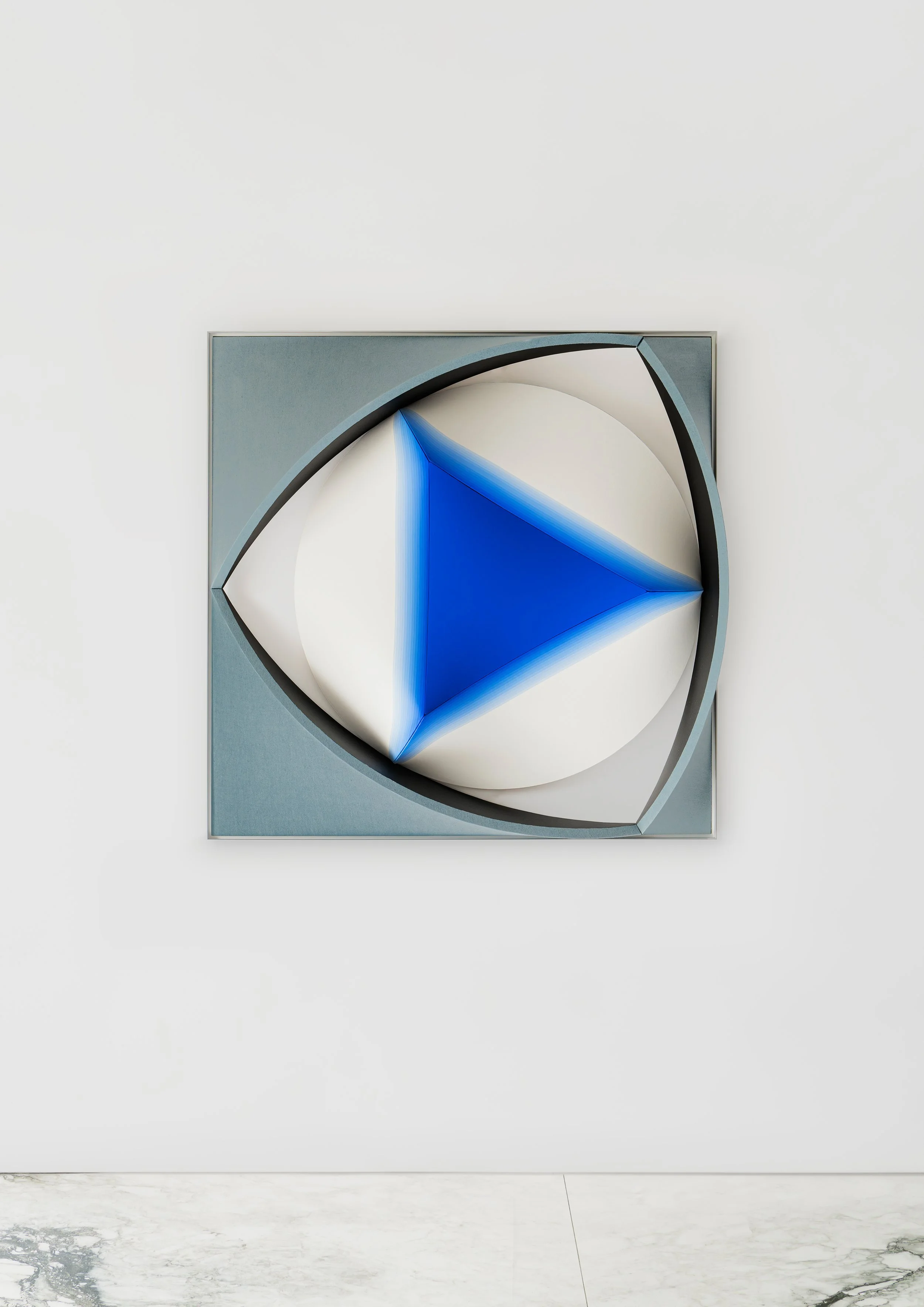
GEOMETRY OF RESTRAINT—Triangle inside Circle inside Reuleaux Triangle inside Square
Category: Architectonic Painting
Medium: Acrylic on dyed linen, structured by architectonic wooden frames
Dimensions: W 108 × H 108 × D 15.5 cm
Year of Execution: 2024
Form-Giving Conditions
Typological:
Space (in)Tension | Constraining Structure | Tensioned Membrane | Dynamic Equilibrium | Constitutive Void
Particular:
Geometric Restraint | Dynamics within Constraint | Dynamic Potential | Latent Motion | Suspended Time
Nested Organisation | Inscription and Circumscription | Circle and Square | Point of Contact | Reuleaux Triangle | Spatial Cavity
Stepped Gradient | Unpainted Finish | Single-Colour Painted Finish
Concept Description
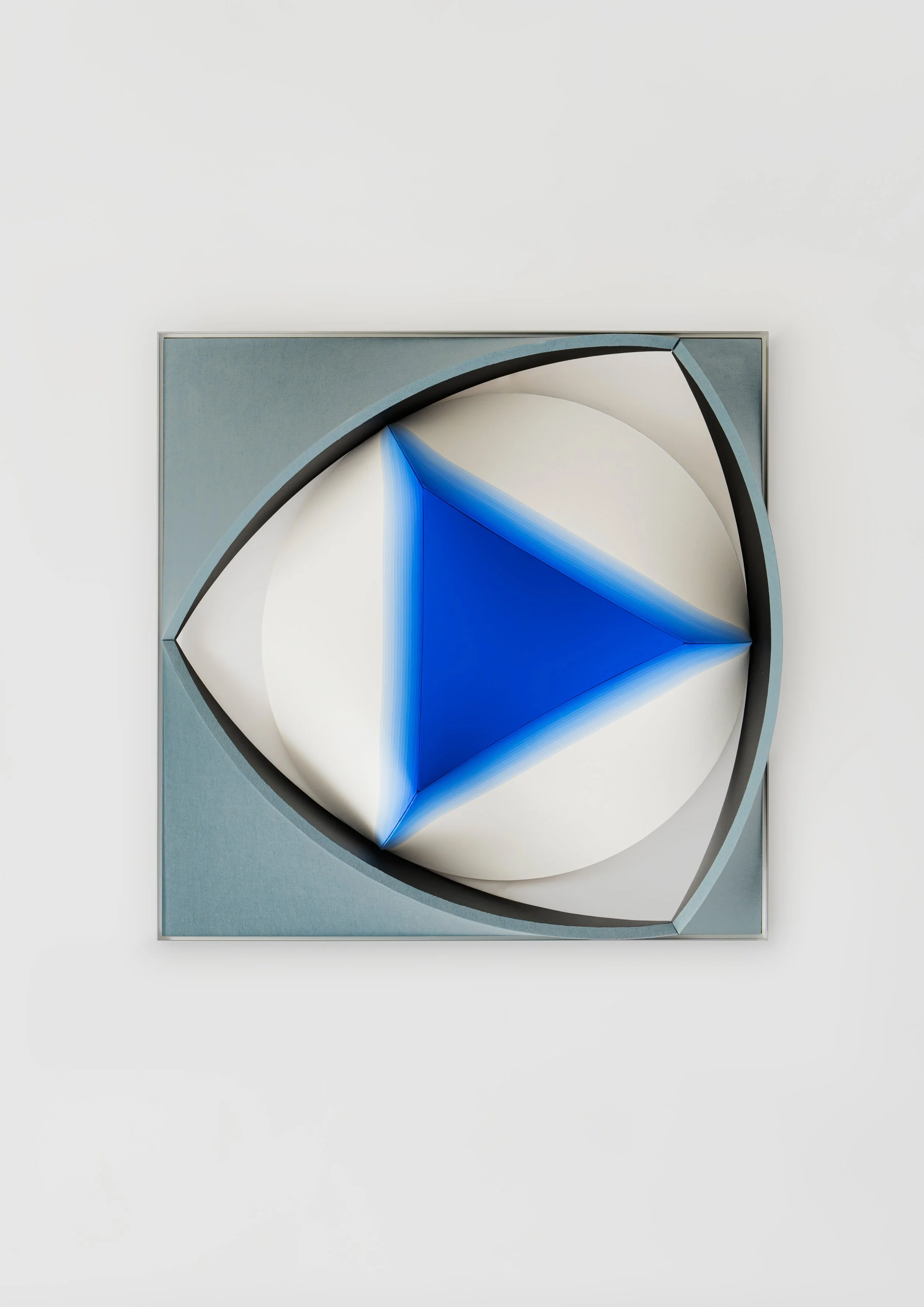
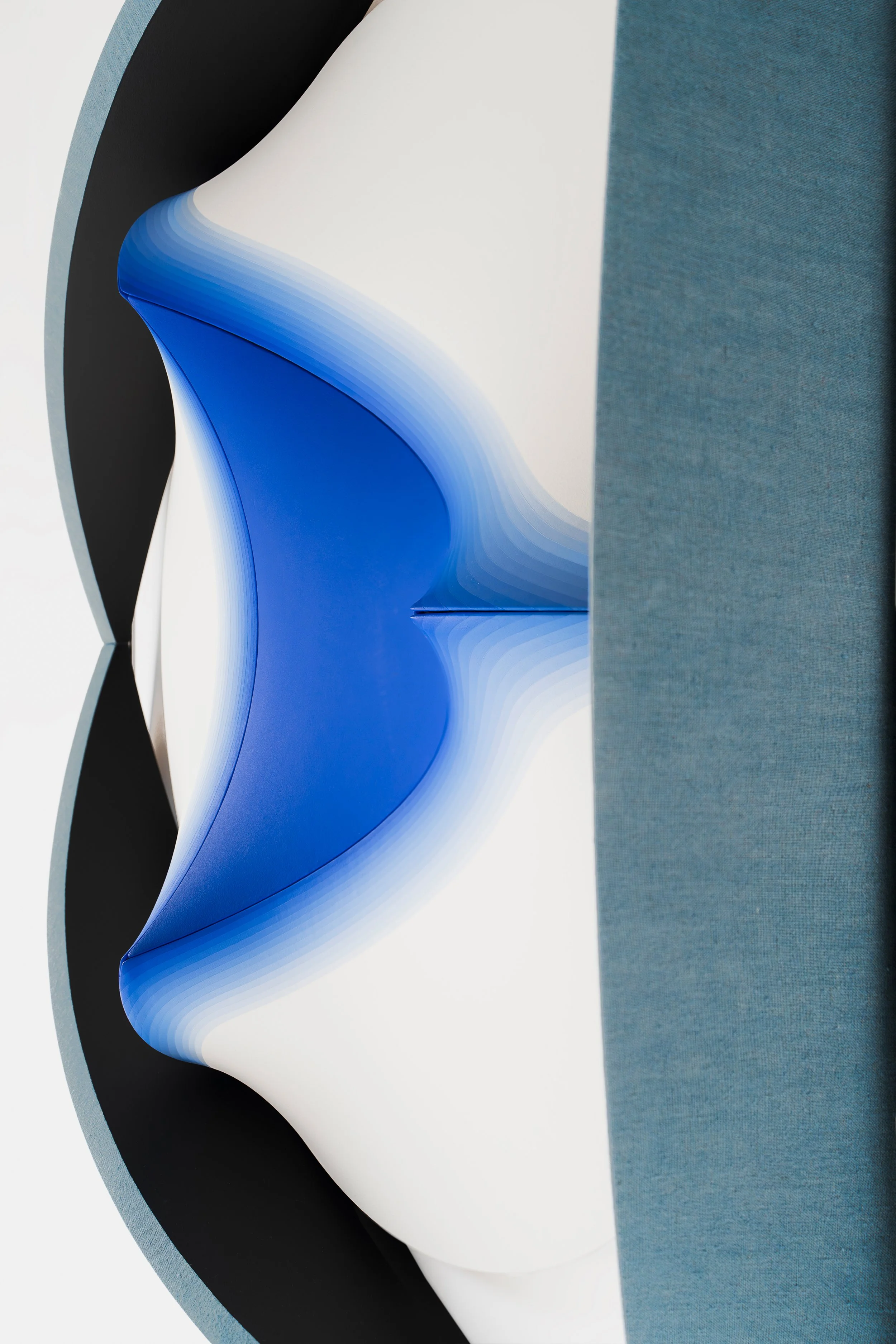
GEOMETRY OF RESTRAINT—Triangle inside Circle inside Reuleaux Triangle inside Square treats restraint not as a mere limitation, but as an active spatial principle in which static balance carries an intimation of movement.
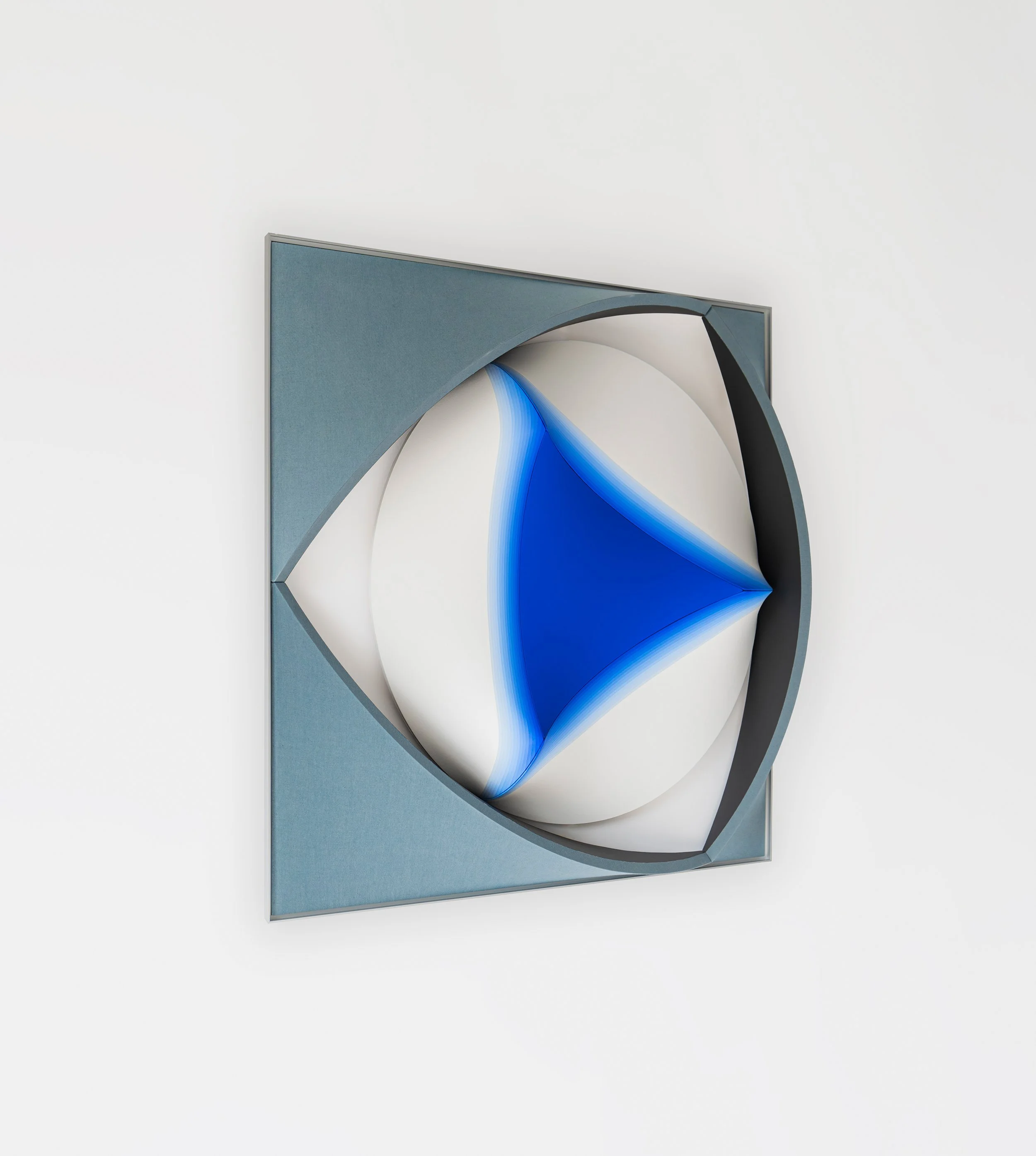
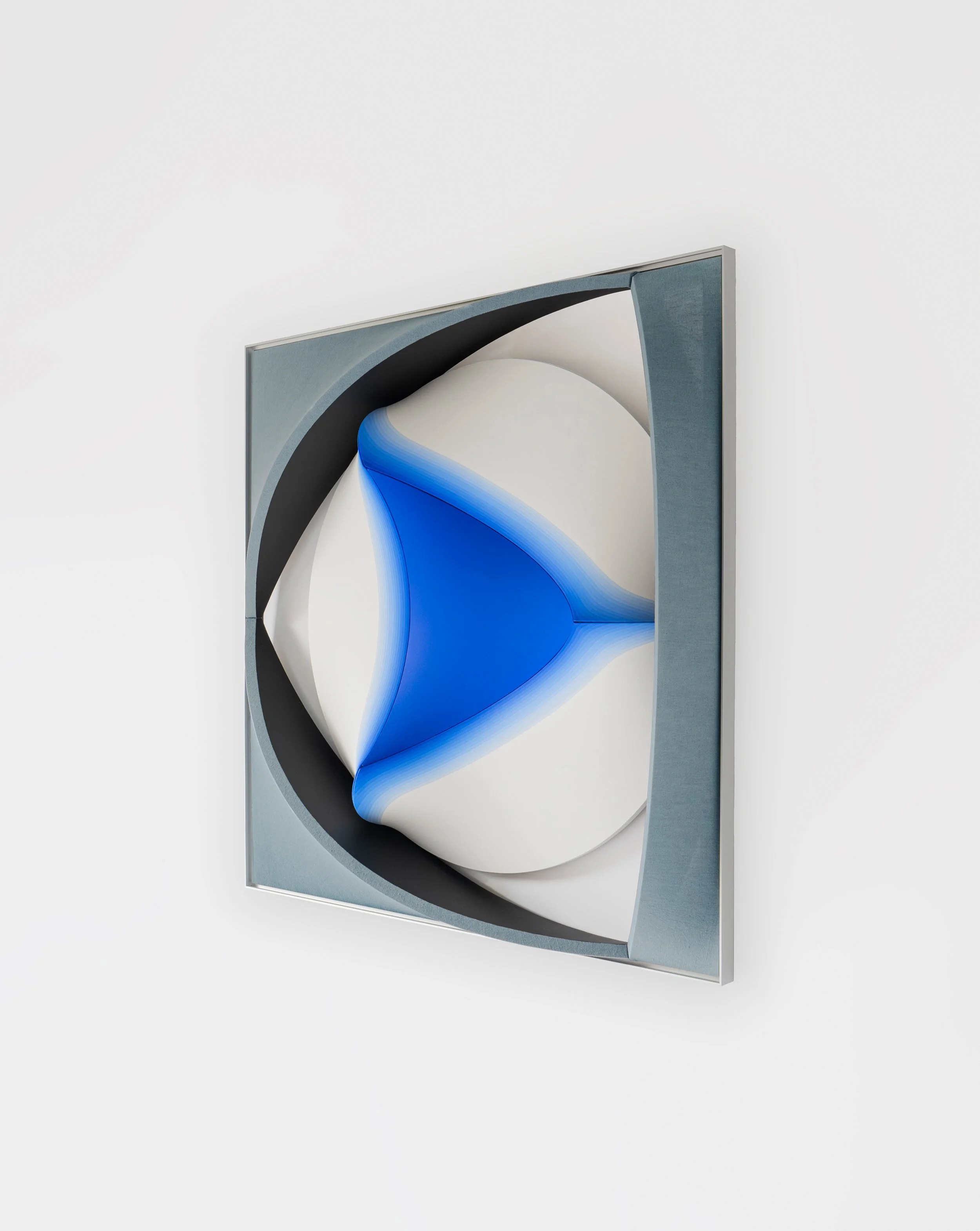
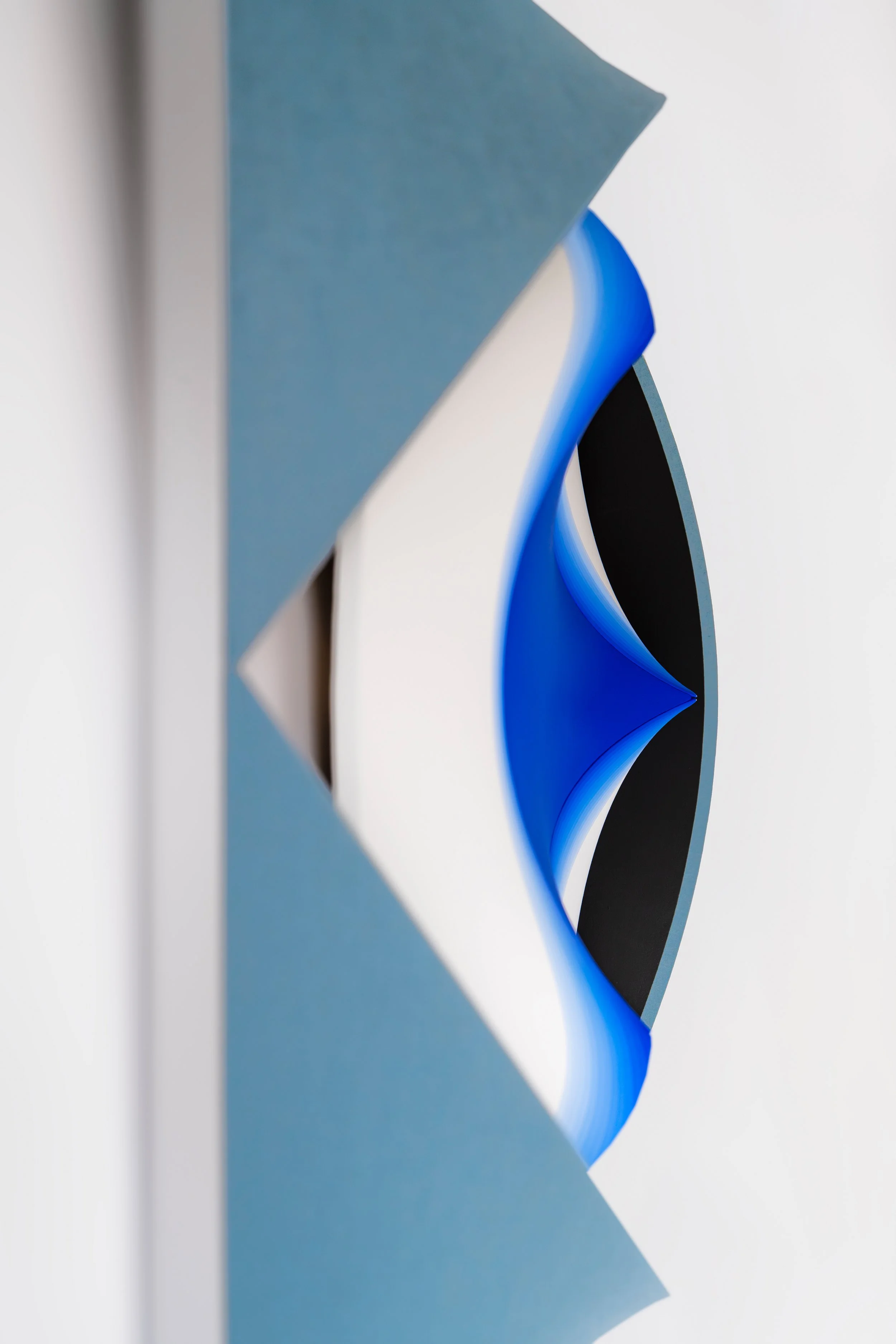
As the title itself declares, the work constructs a multi-layered geometric order of inscription and circumscription: a blue-to-white triangular field is inscribed within a white circular membrane; the circle is positioned within an aperture defined by a Reuleaux triangle—a closed curve of constant width formed here by three curvilinear structures—and the whole configuration is held inside a square frame.
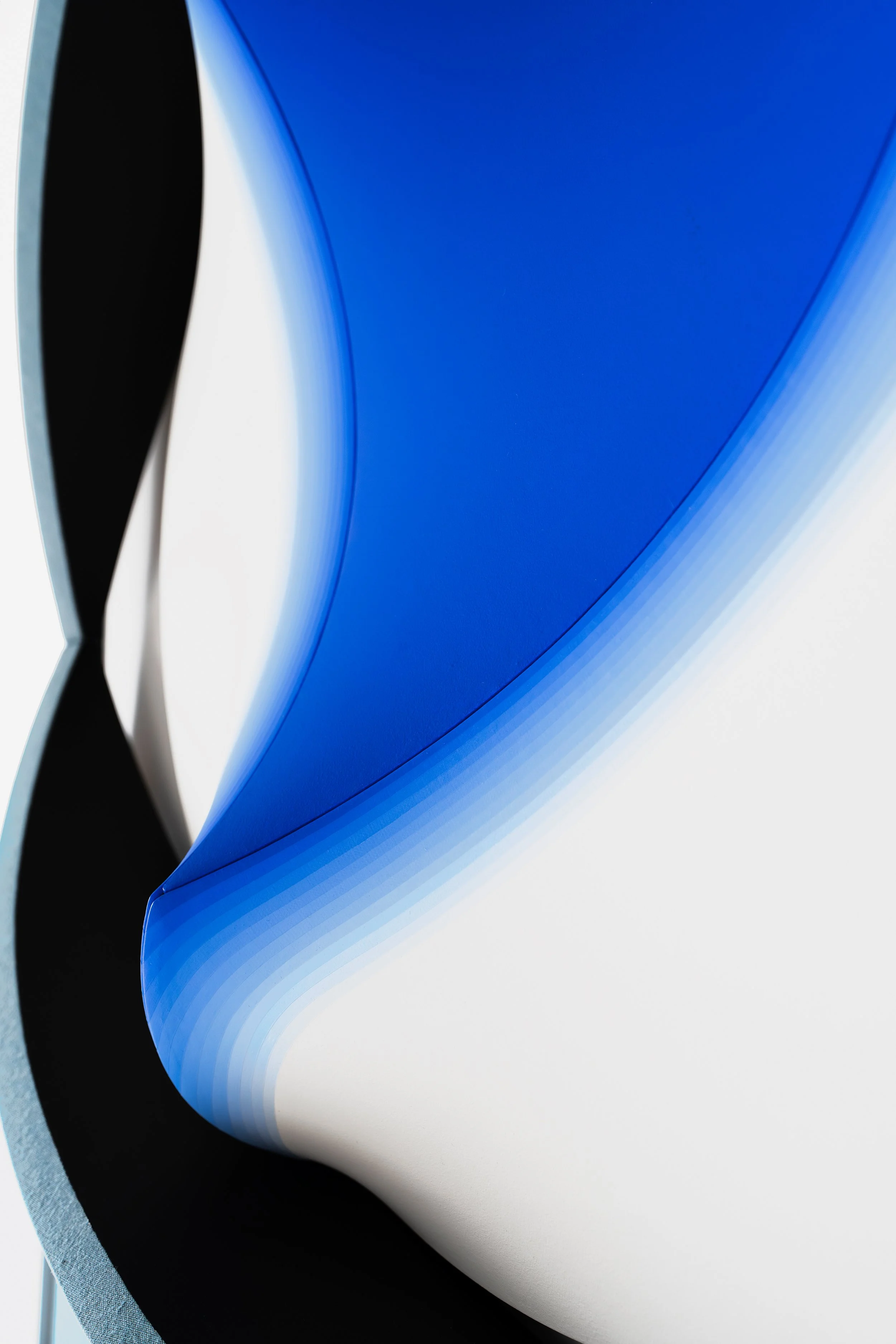
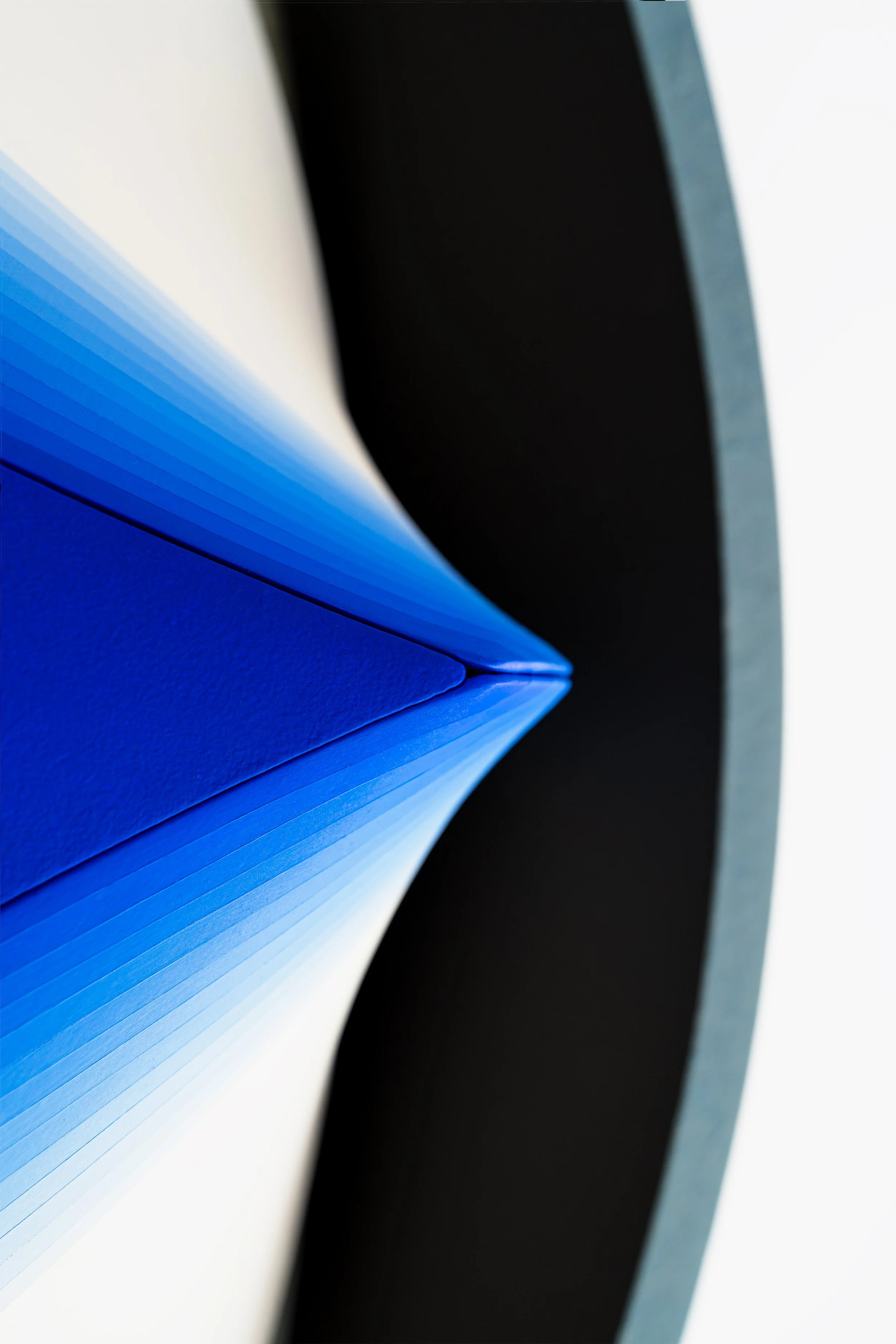
Rather than remaining a stable geometric arrangement, each figure binds the next, producing a tense equilibrium between material body and spatial void, containment and release. The three vertices of the triangular field concentrate this tension, where the membrane appears anchored to the surrounding curvilinear structure and pulled inward.
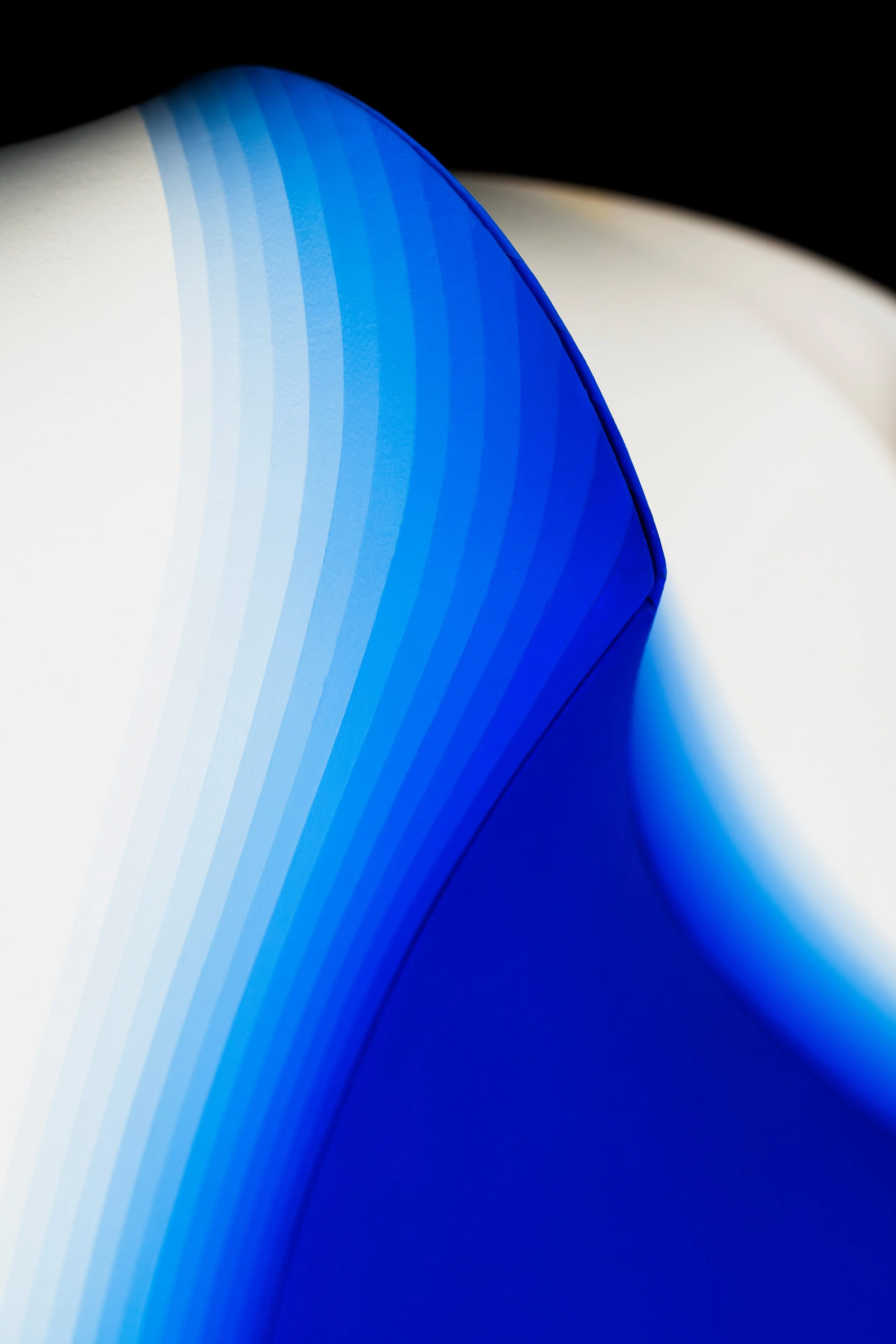
The stepped gradient applied to the triangular field sharpens the three-dimensionality of the tensioned membrane, making the surface read as a blue aperture cut into space. Around it, the unpainted blue-grey linen, white circular membrane and black recessed edges establish a precise contrast between material surface, painted depth and spatial void.
Ultimately, the work gives form to geometric containment as Space (in)Tension under a nested condition of restraint, revealing the potential for dynamicity held latent within geometric order—not by breaking it, but through the precise operation of its limits.